BTC backtesting
BTC backtesting helps Bitcoin traders test rules before live execution.
Bitcoin moves quickly, so a strategy that looks good on a chart can fail after fees, slippage, and stop-loss behavior are included.
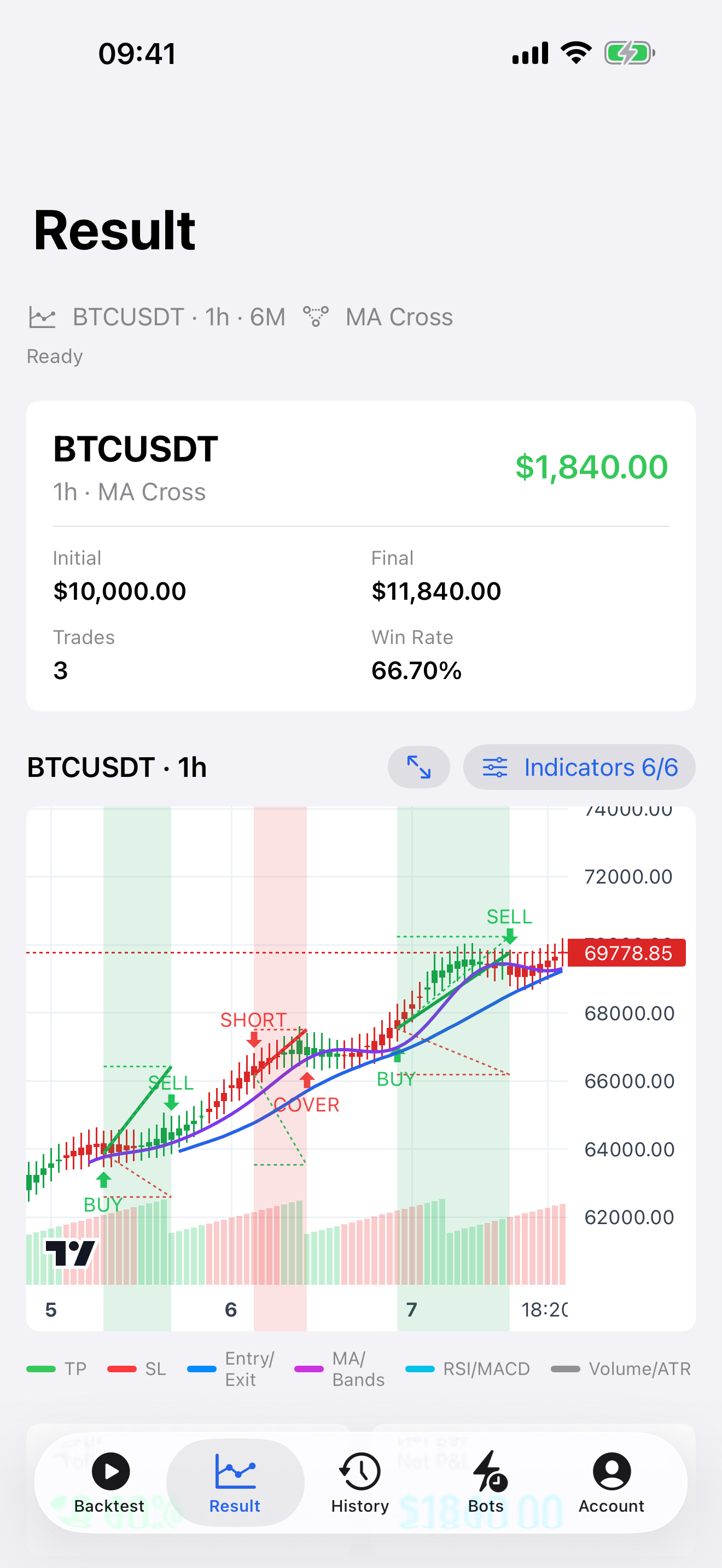
What to test on BTC
Start with a clear symbol such as BTC/USDT, then choose a timeframe, test period, direction, entry rule, exit rule, position size, commission, slippage, stop loss, and take profit. A useful BTC backtest should show both profit and risk, including drawdown and trade count.
Example BTC test
One baseline setup is BTC/USDT, 1H candles, 6 months, MA Cross, long-only, $10,000 starting capital, 2% position size, 0.10% commission, 5 bps slippage, 2% stop loss, and 4% take profit. If winners are not about twice the size of losers before fees and slippage, inspect the trade detail chart to see whether exits are triggered by signal rules, stop loss, or take profit.
Common Bitcoin strategy ideas
Traders often test moving-average crosses, pullbacks to EMA 9 and EMA 21, RSI recoveries, MACD signal crosses, breakouts, and volume confirmation. Backtest can compare these rules and show whether the strategy depends on only a few lucky trades.
Related Bitcoin strategy tests
BTC traders often start with the broader crypto backtesting guide, then compare specific indicator rules like RSI recovery and MACD momentum crosses.
Test this setup in Backtest
Open the web app with the market, timeframe, and strategy from this guide already filled in. Adjust fees, slippage, stop loss, and take profit before running the test.
Run this BTC/USDT MA Cross setupRisk note
BTC backtesting is historical simulation only. It does not predict future Bitcoin price action, and Backtest does not place real-money trades.
Run this BTC setup in Backtest · More guides
Backtest Methodology: How Strategy Tests Are Calculated
Backtest Trading for iOS
Continue your research on iPhone
Run another setup, inspect every simulated trade, and keep your strategy research close at hand.
Download on the App Store